
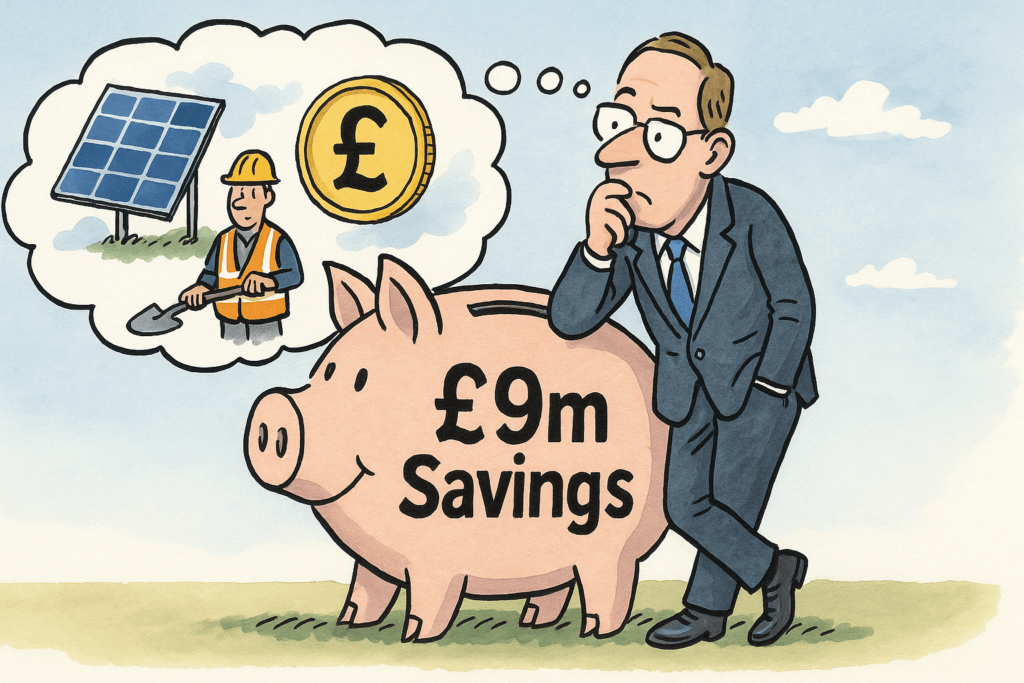
A recent independent valuation of Lincolnshire County Council’s pension fund has identified an £9m annual saving for the authority. This is not a forecast or a hope, it is based on a formal actuarial review.
At the council’s Pensions Committee on 23 October, members received a report from the fund’s actuary, Barnett Waddingham. The valuation assessed the fund’s position as at 31 March 2025 and concluded that all current pension liabilities are fully covered.
As a result, the actuary has recommended reducing the council’s employer contribution rate from 24.1 percent to 17.9 percent. Subject to consultation and final approval, this change would take effect from 1 April 2026.
What is the pension fund and why does this matter
The Local Government Pension Scheme exists to pay pensions to retired council staff. It is funded by:
- Employee contributions
- Employer contributions from the council
- Investment returns over the long term
The latest valuation confirms the fund is in a healthy position. There is no additional risk being passed to taxpayers and no shortfall that needs to be filled.
That matters because pension costs are one of the largest long term financial commitments a council carries. When those costs fall, the impact is real and measurable.
What £9m a year looks like in practice
An £9m annual saving is not marginal. To put it in context:
- £8m is roughly equivalent to a 2 percent rise in council tax
- £9m is recurring, not a one-off saving
- The saving applies before any spending decisions are made
This creates genuine headroom in future budgets. How that headroom is used is a political choice.

A result built over time
Cllr Martin Hill, Conservative resources spokesman and former Finance portfolio holder, described the valuation as a welcome outcome and a vindication of long term financial discipline.
The result reflects years of tight control over staff costs, careful workforce planning, and a cautious investment approach. Pension fund valuations work over long cycles, this one covers a three-year period up to March 2025.
This is not an accidental result and it did not happen overnight.
What happens next
The actuary’s recommendations will now go through a formal consultation process. Final approval is still required, but if agreed the reduced contribution rate will apply from April 2026.
That leaves the new administration with a clear responsibility. They have been handed a significant financial benefit and residents will expect it to be handled carefully.
£9m a year is a serious sum. The decisions about how it is used will say a lot about priorities, competence, and respect for council taxpayers.
The full actuarial report can be viewed under item 9 of the 23 October Pensions Committee agenda.